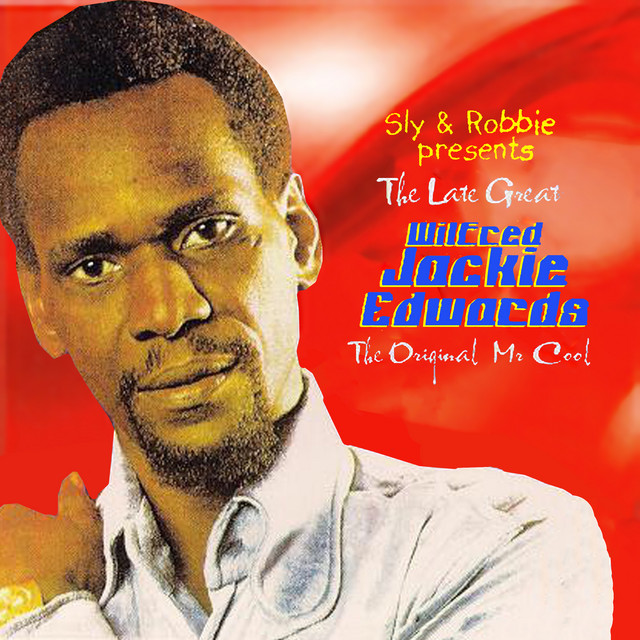
Jackie Edwards
Charts
Tracks
Playlists
Press Mentions
Google Rankings
Overview
Not included in any known risky playlists
Monthly Listeners
Series
- Monthly Listeners
- Listeners from Playlists
- Change
Discography
Top Audiences
Top Listener Locations
 São Luís, BR1,035
 London, GB997São Paulo, BR836Fortaleza, BR757
 Nairobi, KE398
Playlist Summary
Playlist Movement
Event | Playlist | Botted? | Position | Track | Happened at | |
|---|---|---|---|---|---|---|
Biography & Metadata
Jackie Edwards has been called the Nat King Cole of Jamaica, and in many ways it is an apt description for this smooth and versatile singer, who was also a gifted songwriter. Born Wilfred Gerald Edwards in 1938, he was a star on the island by the late 1950s, when he was discovered by future Island Records founder Chris Blackwell, who persuaded Edwards to relocate to the U.K. in 1962. Edwards had a huge talent, and although some critics have dismissed him as too smooth and sentimental (he was the original "cool ruler"), he recorded solid material in all of Jamaica's evolving musical modes, including ska, rocksteady, roots and lovers rock (a style for which his approach was clearly a prototype), but also made contributions in straight pop styles, even recording a marvelous gospel album. He wrote the first three chart hits for the Spencer Davis Group in the mid-1960s, including the classics "Keep on Running" and "Somebody Help Me," and his "Get Up" formed the compositional base for The Clash's "Revolution Rock." When Blackwell began steering his Island imprint more in the direction of rock in 1972, Edwards returned to Jamaica, where he recorded what is arguably his best work with producer Bunny Lee, who paired him with The Aggrovators. Somewhat forgotten today, possibly because he was more main- stream than the typical dreaded-out Jamaican singers of his era, Edwards was as versatile a performer (and as good a songwriter) as the island ever produced. He died on August 15, 1992 of a heart attack. ~ Steve Leggett, Rovi
First discovered Aug 26, 2026, 4:29 PM