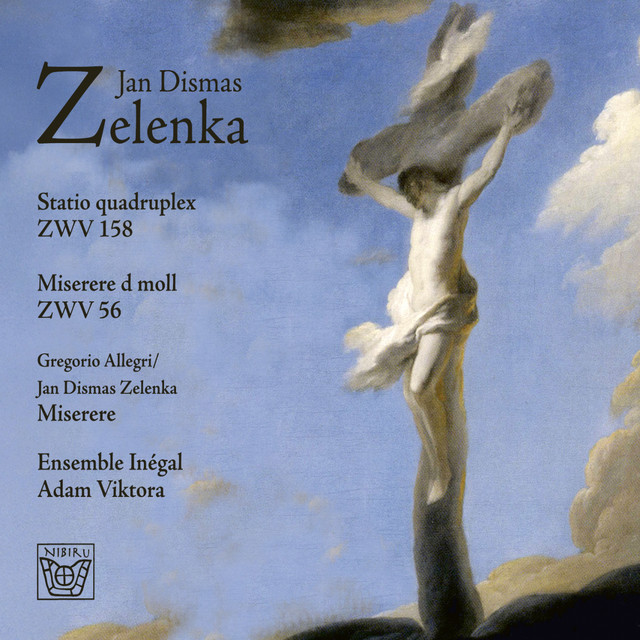
Jan Dismas Zelenka
Charts
Tracks
Playlists
Press Mentions
Google Rankings
Overview
Not included in any known risky playlists
Monthly Listeners
Series
- Monthly Listeners
- Listeners from Playlists
- Change
Discography
Top Audiences
Top Listener Locations
 Madrid, ES1,137
 Paris, FR959
 Berlin, DE912
 Mexico City, MX830
 London, GB823
Playlist Summary
Playlist Movement
Biography & Metadata
An innovative Baroque composer whose reputation was steadily on the rise during the anything-goes years of the waning 20th century, Jan Dismas Zelenka was born in Lounovice, Bohemia (now part of the Czech Republic). He was a court musician in Dresden for most of his career, and both J.S. Bach and Georg Philipp Telemann knew and admired his music. Except for brief periods of travel, during which he refined his craft (he took lessons from Fux and Lotti even after his own technique had been perfected), he served as a double bass player in the court orchestra and later aided the ailing court music director Heinichen in his duties. Upon Heinichen's death, the position was awarded to another musician, which greatly disappointed Zelenka, who felt that his accomplishments as a composer had not been recognized. He died in Dresden, on December 22, 1745. Zelenka was best known, in his own time as in ours, for his harmonic and dynamic daring. An indefatigable experimentalist, he pushed the often conventional harmonic language of the Baroque to its limits, frequently using chromaticism in general and unresolved chains of suspensions in particular. Zelenka's dynamic markings, quite unusual for the Baroque, bring to mind a composer of the Romantic era. It is to his credit that the unusual devices he employed were woven into a composition's basic concept, and not treated as mere tricks. Zelenka was also known for his pioneering use of Czech folk rhythms, anticipating Haydn's use of central European folk music by half a century. Many of his innovations appear in his trio sonatas and other instrumental works (one of which bears the witty -- and enigmatic -- name of "Hipocondrie à 7"). It should noted that Zelenka also wrote a great deal of choral music of a more conventional character, including some in the stile antico -- the strict polyphonic style of the Renaissance. ~ TiVo Staff, Rovi
First discovered Aug 31, 2026, 12:45 PM