Florent Pagny
Charts
Tracks
Playlists
Press Mentions
Google Rankings
Overview
Not included in any known risky playlists
Monthly Listeners
Discography
Top Audiences
Top Listener Locations
 Paris, FR46,535Lyon, FR22,388Marseille, FR21,098Lille, FR11,094
 Montreal, CA10,580
Playlist Summary
Playlist Movement
Event | Playlist | Botted? | Position | Track | Happened at | |
|---|---|---|---|---|---|---|
Biography & Metadata
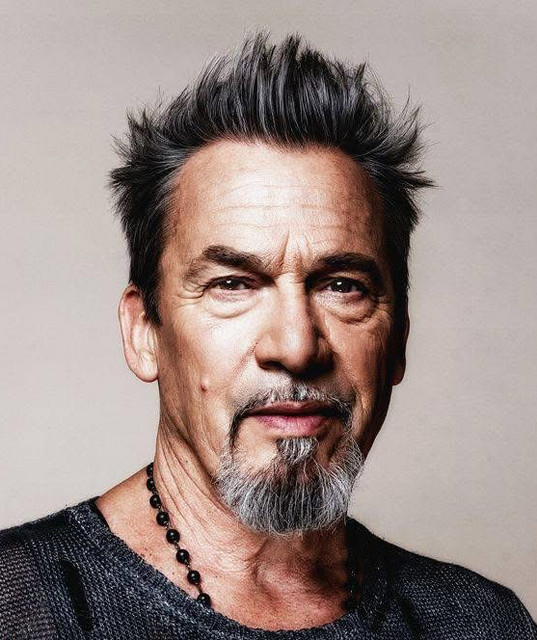
Despite an unpredictable and often controversial career that has included detours into opera, the chanson tradition, and feature films as well as myriad personal obstacles, Florent Pagny has remained one of the biggest-selling recording artists in contemporary French pop since the late '80s. Singing in a commanding baryton-Martin voice, he sent hits like “Savoir aimer” and “Ma liberté de penser” to the top of the French pop charts, with many of his albums achieving that same feat. Starting with 2009's C'est comme ça, Pagny also released several successful Spanish-language albums, further diversifying his star status throughout Europe. Between 2012 and 2024, he enjoyed two high profile stints coaching The Voice France, though his career was temporarily derailed by a 2022 cancer diagnosis. Following his recovery, Pagny made a successful comeback with 2025's chart-topping Grandeur Nature. Born November 6, 1961, in Chalon-sur-Saône, Pagny was the product of a working-class background and spent the better part of his adolescence competing in local radio contests and amateur showcases. At 16 he quit school and relocated to Paris to pursue a career in music and theater, working a series of odd jobs before beginning vocal studies at the Conservatoire de Levallois-Perret. While moonlighting as a bartender Pagny befriended talent scout Dominique Besnard. Smitten with Pagny's wild, unkempt look, Besnard helped him land roles in the features La Balance and Alain Corneau's Fort Saganne, and the resulting attention also led to a record deal. Pagny issued his debut single, "N'Importe Quoi," in 1987. The anti-drug anthem proved a blockbuster success, selling in excess of one million copies and rocketing its singer to overnight superstardom. With the 1988 release of the follow-up, "Laisser Nous Respirer," Pagny solidified his image as an icon of youthful rebellion and angst, although his third single, "Comme d'Habitude," unexpectedly resurrected Claude François' variété classic. Finally, in the spring of 1990 Pagny issued his first full-length LP, Merci. While music critics ridiculed his rebel stance and relationship with nubile pop sensation Vanessa Paradis, the record nevertheless proved a sizable hit, and early the following year he headlined a sold-out performance at Paris' Zénith. After a return to his movie career, Pagny resumed his musical pursuits with 1992's Réaliste, a melancholy and disjointed effort recorded in the wake of his breakup with Paradis. The record sold poorly, and as the singer squandered his fortune on clothes, motorcycles, and partying, he sank into a depression that kept him out of the limelight for close to two years. Pagny resurfaced in 1994 with Rester Vrai, which introduced a newly modernized rock sensibility that restored his commercial luster. A year later, the best-of collection, Bienvenue Chez Moi, launched several new singles, most notably his smash cover of Lucio Dalla's operatic hit "Caruso." With the title cut from 1997's Savoir Aimer, Pagny returned to the top of the French singles chart and later won Best Male Artist of the Year honors at the annual Victoires de la Musique Awards. The sole French representative included at Luciano Pavarotti's all-star international charity concert in June 1998, Pagny returned to chart prominence later that year with the Erick Benzi-penned "Dors." In late 1999, he again defied conventional wisdom with Ré-Création, a collection of covers drawn from the French chanson idiom. Châtelet les Halle followed in late 2000, and a year later Pagny issued 2, a series of duets enlisting singers including Pascal Obispo and Axel Bauer. While 2003's Ailleurs Land was another best-seller, Pagny took a public thrashing in early 2004, when he was prosecuted for tax evasion. His next film, Quand Je Vois le Soleil, also flopped, but at year's end his career again flourished via Baryton, a set indulging his lifelong passion for opera. The chanson-inspired Abracadabra followed in the spring of 2006. In 2007, he released Pagny Chante Brel, an album of Jacques Brel covers given a reworking in Pagny's own distinct style. He returned in 2010 with Tout et son Contraire and the acoustic live release Ma Liberté de Chanter in 2012. Around this time, he also accepted a role as coach on the talent competition The Voice France. For 2013's Vieillir Avec Toi, Pagny chose the work of Calogero, who composed and directed the entire album. It produced Pagny's biggest hit in ten years, and topped the charts in France and Belgium, spent over a year on the French charts, and was certified diamond. A live version of the album, Vieillir Ensemble: Le Live, was released at the end of 2014 and reached the charts as well. Over the next several years, Pagny continued maintain his coaching role on The Voice France, while performing regularly, and releasing studio albums like 2017's Le présent d'abord and 2019's Aime la vie. 2021's L'avenir returned Pagny to the top of the French pop charts and continued his collaboration with producer Calogero. It was also his last release before a 2022 lung cancer diagnosis paused his career. By mid-2023, he had largely recovered from his illness and moved cautiously forward with his next project, 2bis, which consisted of material from earlier in his career reinterpreted in duet form. His duet partners included Patrick Bruel, Zazie, and Pascal Obispo. As he continued to heal, he resumed his role on The Voice France and performed alongside Il Cello on the Season 14 final. Pagny cemented his comeback with 2025's Grandeur Nature, an album of all new material which he described as "a rebirth." ~ Jason Ankeny
First discovered Aug 14, 2026, 10:05 PM