Zebda
Charts
Tracks
Playlists
Press Mentions
Google Rankings
Overview
Not included in any known risky playlists
Monthly Listeners
Series
- Monthly Listeners
- Listeners from Playlists
- Change
Discography
Genres
Spotify has not assigned genres to this artist yet
Top Audiences
Top Listener Locations
 Paris, FR9,415
 Montreal, CA5,361Lyon, FR4,207Marseille, FR4,065Toulouse, FR3,185
Playlist Summary
Playlist Movement
Event | Playlist | Botted? | Position | Track | Happened at | |
|---|---|---|---|---|---|---|
Biography & Metadata
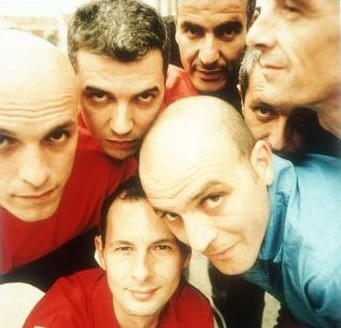
"We who live by rock and rai and accordion/On the periphery of commercial hits" is a line from Zebda's hometown portrait Toulouse and that's a pretty accurate capsule description of where the French band fronted by three second-generation North African immigrants fits among the Euro-mix crew. Rough-and-ready ragamuffin reggae and rapid-fire rapped vocals, Arabic flourishes, touches of French café accordion, a savvy command of dynamics, and well-constructed arrangements smoothly blending those elements into a distinctive whole complete the musical picture. Zebda never lost touch with the Toulouse neighborhood roots that nourished its biting social commentaries and street-life portrayals, using its popularity and influence to stage cultural and political initiatives back in the 'hood. Zebda (which means butter in Arabic) formed in 1985 to provide the soundtrack for a music video put out by a neighborhood group in Toulouse. Lyricist/vocalist Magyd Cherfi recruited guitarist Pascal Cabero, bassist Joel Saurin, and drummer Vincent Sauvage from his school friends and roped in brothers Mustapha Amokrane and Hakim Amokrane to fill out the tag-team vocal squad. The band kept playing sporadically at neighborhood functions, but re-formed seriously in 1988 with keyboard player Rémi Sanchez completing a lineup that has remained constant ever since. With the Clash, the Specials, James Brown, and Mano Negra among its main influences, the septet developed a strong following playing at small bars and cafés around Toulouse and throughout southwest France. A triumphant April 1990 performance at the prestigious Springtime in Bourges festival in central France brought Zebda to national attention and led to a tour of France, Italy, and England that year. Zebda then signed with Barclay and its 1992 debut Arene des Rumeurs won widespread acclaim for militant lyrics meshed with humor and its multi-faceted sound. After hitting the national tour circuit again, Zebda staged a major festival in 1993 in poorer sectors of Toulouse that featured several other bands, including major French rockers Noir Desir. Released in 1995, the hard-hitting Le Bruit et L'Odeur (The Noise and Smell) took its title phrase from a speech by conservative French political leader Jacques Chirac. Cherfi and the Amokrane brothers also formed the Tactikollectif Collective in 1997 to support illegal immigrants and released a self-produced album of protest songs from various periods and countries. The mellower, more melodic Essence Ordinaire was Zebda's commercial breakthrough in 1998 when the exuberant "Tomber la Chemise" (Take Off Your Shirt) became a summer hit. Essence Ordinaire went on to platinum status in France, selling 300,000 albums, and the group received the Victoire de la Musique awards for Best Song and Best Group. Commercial success didn't prompt Zebda to turn its back on its Toulouse roots and, convinced music is an important means of political struggle, the group formed the Motivé organization to run a list of independent candidates in the spring 2001 municipal elections. This group uses lyrics celebrating life and diversity as much as they criticize social ills and a multi-faceted musical mix geared toward making audiences think as they dance. ~ Don Snowden, Rovi
First discovered Sep 22, 2026, 4:50 PM