Westbam/ML
Charts
Tracks
Playlists
Press Mentions
Google Rankings
Overview
Not included in any known risky playlists
Monthly Listeners
Discography
Genres
Spotify has not assigned genres to this artist yet
Top Audiences
Top Listener Locations
 Berlin, DE7,707Leipzig, DE3,218Hamburg, DE2,500Munich, DE2,393Frankfurt am Main, DE2,364
Playlist Summary
Playlist Movement
Event | Playlist | Botted? | Position | Track | Happened at | |
|---|---|---|---|---|---|---|
Biography & Metadata
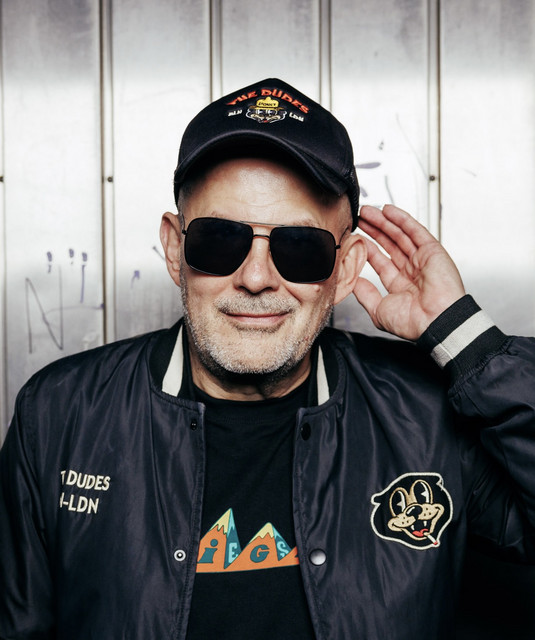
The leader of Germany's house and techno scene since his beginning early in the 1980s, WestBam recorded several house/rave crossover hits during the late '80s and early '90s before exploring styles such as trance and electro. He is renowned for his founding of the Mayday Festival and the Love Parade, the latter of which routinely drew hundreds of thousands of clubgoers into the streets of Berlin on an annual basis. In addition to numerous releases under his own name as well as several pseudonyms, he has worked extensively with producer Klaus Jankuhn, most notably as Members of Mayday, which supplied the Mayday Festival with its anthem every year. Born in Münster, Maximilian Lenz began DJ'ing in 1983 and became known as WestBam as a shortened version of his original nickname, which he received in honor of his place of birth (Westphalia) and his biggest musical influence (Afrika Bambaataa). He moved to Berlin in 1984, sticking to early industrial dance and hip-hop until American house music began crossing the Atlantic midway through the '80s. He had begun producing as well in 1985, and like many German dance figures, gradually moved from Chicago house to embrace the harder, more Teutonic sounds of Detroit techno during the late '80s. After founding his own Low Spirit Recordings in 1988, WestBam hit the German charts with his first single on the label, "Monkey Say Monkey Do." He made a surprise appearance at the 1988 Olympic Games in South Korea (representing his country as a cultural contribution) and charted during 1989 as well with the hits "And Party" and "The Roof Is on Fire." Also in 1989, WestBam released his debut album, The Roof Is on Fire. To celebrate his surprising success, WestBam decided to organize an outdoor event that could, he hoped, bring the new dance music out of nightclubs and into the mainstream. Called the Love Parade, it debuted that year with under 500 people. Less than a decade later, the Love Parade would count more than 250,000 participants. During the early '90s, Low Spirit Recordings had several hits by acts Mark Oh and Marusha. WestBam released his second album, A Practising Maniac at Work, in 1991, and founded the Mayday Festival later that year. By the mid-'90s, long after most rave cash-ins had spun themselves out, WestBam was going back into straight-ahead techno and trance with singles like 1994's "Celebration Generation" and "Bam Bam Bam" (the title track from his fourth album, which hit the German Top 20). For the tenth anniversary of Low Spirit Recordings, he released The Age of the DJ Mixer: 10 Years of Low Spirit, a compilation including several WestBam productions. Two 1997 singles, "Sonic Empire" and "Sunshine," hit the German singles charts (both were official anthems, for Mayday and Love Parade respectively) and prompted a new WestBam album, We'll Never Stop Living This Way, which entered the Top 40 of the German charts. Much more overtly electro-influenced than his previous albums, We'll Never Stop included a collaboration with Afrika Bambaataa himself. Around this time, WestBam also worked with Zulu Nation member Afrika Islam under the name Mr. X & Mr. Y, releasing New World Order in 1999 and Live from Berlin - 4 Turntables and a Microphone in 2000. Following his 2001 remix of Rammstein's "Links 2 3 4," WestBam released Right On in 2002. The album's biggest hit, "Oldschool Baby," featured new wave singer Nena. Do You Believe in the Westworld appeared in 2005, and WestBam toured with a live band in support of the album. Following a few non-album singles, including collaborations with Superpitcher and TL Pimps, WestBam released the triple-CD mix compilation A Love Story 89-10 in 2010. Following 2011's "Original Hardcore" (with Moguai), WestBam released Götterstrasse in 2013. The full-length included several celebrity guests, including Kanye West, Lil Wayne, New Order's Bernard Sumner, and Iggy Pop. ~ John Bush, Rovi
First discovered Aug 22, 2026, 3:08 PM