The Casuals
Charts
Tracks
Playlists
SEO
Press Mentions
Overview
Not included in any known risky playlists
Monthly Listeners
Discography
Genres
Spotify has not assigned genres to this artist yet
Top Audiences
Top Listener Locations
 London, GB1,115Manchester, GB410
 Sydney, AU406Birmingham, GB351Brisbane, AU310
Playlist Summary
Playlist Movement
No activity found
This artist's playlist additions and removals will appear here.
Biography & Metadata
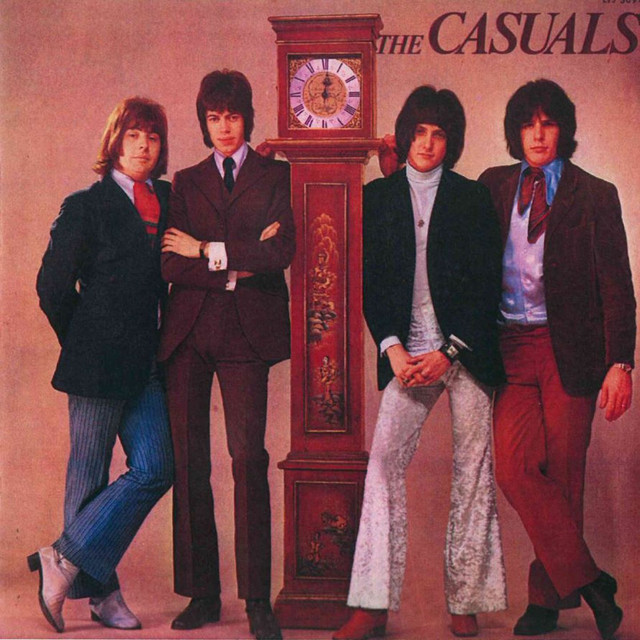
Three times winners on Opportunity Knocks, British television’s hugely popular talent show of the late 60s, the Casuals subsequently left the UK for Italy, where they became a leading attraction. Alan Taylor (b. Halifax, Yorkshire, England; guitar, bass), Johnny Tebb (b. 1 October 1945, Lincoln, England; organ), Howard Newcombe (b. Lincoln, England; guitar, trumpet) and Robert O’Brien (b. Bridge Of Allan, Central Scotland; drums) were based in Milan for several years before returning to Britain in 1968, when their single, ‘Jesamine’, entered the charts. The song was originally recorded by the Bystanders as ‘When Jesamine Goes’, but the Casuals’ inherently commercial reading coincided with a prevailing trend for emotional ballads. The single ultimately reached number 2, but later releases were less successful and ‘Toy’ (1968), which peaked at number 30, was their only other hit. The Casuals continued to record superior pop: Move leader Roy Wood wrote and produced the polished ‘Caroline’ (1969), but as the decade closed, so their style of music grew increasingly anachronistic.
First discovered Sep 29, 2026, 7:16 AM