Franz von Suppé
Charts
Tracks
Playlists
Press Mentions
Google Rankings
Overview
Not included in any known risky playlists
Monthly Listeners
Discography
Genres
Spotify has not assigned genres to this artist yet
Top Audiences
Top Listener Locations
 Mexico City, MX1,238
 Santiago, CL870
 Madrid, ES844
 Vienna, AT822
 São Paulo, BR688
Playlist Summary
Playlist Movement
Event | Playlist | Botted? | Position | Track | Happened at | |
|---|---|---|---|---|---|---|
Biography & Metadata
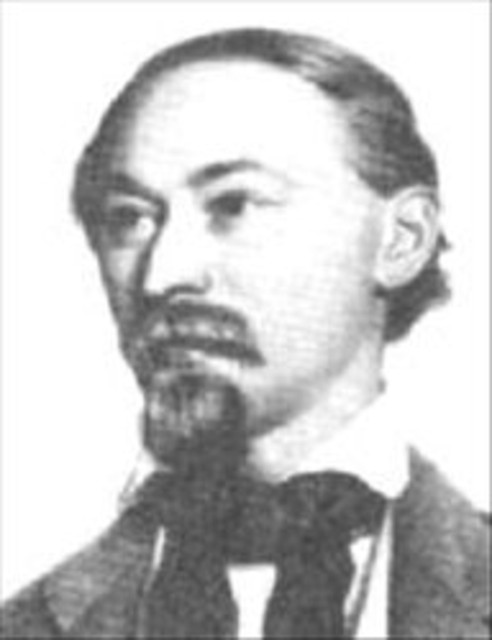
Composer Franz von Suppé -- in full, Francesco Ezechiele Ermenegildo, Cavaliere Suppé-Demelli -- was the leading light of Austrian operetta in the middle and late nineteenth century, enjoying a success that rivaled that of Frenchman Jacques Offenbach. Suppé's pedigree perhaps hinted at his promise as a composer of stage works: He was a distant relative to Italian opera luminary Gaetano Donizetti, who took an active hand in Suppé's education when the budding composer's talent became evident. Suppé was born in Spalato, Dalmatia (now Split, Croatia); his parents, who discouraged his musical career, were Austrians of Belgian extraction. Though he demonstrated compositional aptitude at a young age -- by the age of 13 he had written a Mass -- Suppé studied law in Italy. After his father's death, however, he returned to Austria with his mother and made several return visits to Italy, probably resulting from his contact with Donizetti. Steeped in the music of Rossini and Verdi, he brought a lifetime's reserve of Italianate melody to Vienna. In 1841 Suppé produced a singspiel, Jung Lustig (Young and Merry), which launched his career as a composer of operetta and light concert music. In 1846 he wrote his most familiar work, Dichter und Bauer (Poet and Peasant), an overture to a now-forgotten stage play; though an agreeable concert staple today, it attracted little attention at the time of its composition. Suppé enjoyed his first flush of real success with The Country Girl (1847), which cemented his reputation in such locales as Vienna, Baden, and Pressburg (Bratislava). His popularity remained steady for decades; in the course of his career he produced a copious quantity of lively, attractive music, emerging in the process as the virtual godfather of Viennese operetta. That most characteristic phase of Suppé's career began with Das Pensionat (The Boarding School), a work designed to provide a Viennese counterpart to the phenomenally successful French operettas of Jacques Offenbach. Offenbach's works had invaded Viennese theaters, but Suppé countered their influence with such works as Gervinus, Flotte Bursche (Jolly Lad), and Fatinitza, each of which was performed more than 100 times. His fame resulted in an invitation to visit the seemingly inhospitable climes of Wagner's first Bayreuth festival in 1876. Aside from Poet and Peasant, Suppé's most enduring works include the Light Cavalry Overture (1866) and the operetta Boccaccio (1879), widely regarded as the composer's finest effort. His other music includes a Requiem, masses, symphonies, and various choral and vocal works.
First discovered Sep 11, 2026, 11:40 PM