Danyèl Waro
Charts
Tracks
Playlists
Press Mentions
Google Rankings
Overview
Not included in any known risky playlists
Monthly Listeners
Series
- Monthly Listeners
- Listeners from Playlists
- Change
Discography
Top Audiences
Top Listener Locations
 Saint-Denis, FR3,506Paris, FR1,956Le Tampon, FR1,555Saint-Pierre, FR1,201Lyon, FR900
Playlist Summary
Playlist Movement
Biography & Metadata
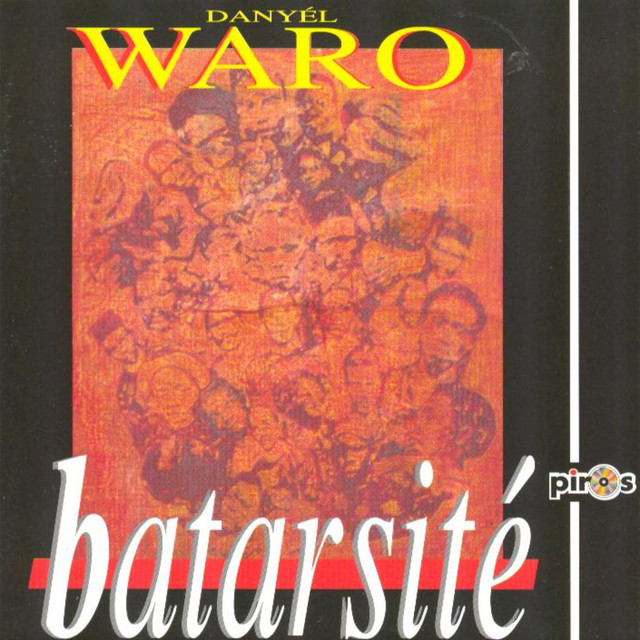
Danyel Waro was born and raised at the Ile de la Réunion, a French territory in the Indian Ocean east of Madagascar. A descendant of French colonists, he is the most renowned proponent of the Maloya, a compound rhythm which had its origin in chants of enslaved workers on the sugar cane plantations, a sort of "blues à la Réunion." Maloya is seen as a strong force of Réunion identity and was at times even banned by the French authorities governing the island. Whereas the archaic Maloya consisted first of all chants sung over traditional percussion instruments, Waro must be credited with having expanded the Maloya style to deliver a message and through his performances, music, and lyrics, live up to a new unity. He sings predominantly in Creole and not in French, which is already a message in itself, and his powerful high voice is fascinating and haunting at the same time. He uses self-made instruments and opposes any Maloya "modernization" in the sense of weakening its strong cultural roots. Consequently, Waro is considered the "Black soul of the Maloya." But his outermost weapon is the lyrics, and in his song poems he sings about the problems of contemporary Réunion: the dominance by the French culture, Creole being seen as a inferior language, and racism. He also writes about work, love, and death. On his home island, Waro has been a legend since he became active in the beginning of the '80s, and he is known for his staunch principles: when he refused to do his military service in France he spent two years in a French military prison for draft-dodging. As the '90s were dawning, his star also rose quickly in France, the climax being an extensive 1994 tour through the motherland. The year 1994 also marks his first CD release, Batarsité, an intense recording. A tour through Francophone West Africa in 1996 also made him well-known in this part of the African continent. In the same year, he released Sega La Pente, a collaboration with his fellow Réunionsinger Françoise Guimbert. Foutan Fonnkér (1999), which won him the Grand Prix de l'Académie du Disque Charles Cros, one of the most prestigious French music prizes, marks the high point of his recording career. Waro admits that he could record much more, but this is not his intention, as live performances are his passion. ~ Frank Eisenhuth, Rovi
First discovered Sep 15, 2026, 1:46 PM