Grigoras Dinicu
Charts
Tracks
Playlists
Press Mentions
Google Rankings
Overview
Not included in any known risky playlists
Monthly Listeners
Series
- Monthly Listeners
- Listeners from Playlists
- Change
Discography
Genres
Spotify has not assigned genres to this artist yet
Top Audiences
Top Listener Locations
 Mexico City, MX173
 Bucharest, RO117
 Santiago, CL104
 Madrid, ES66
 London, GB51
Playlist Summary
Playlist Movement
Biography & Metadata
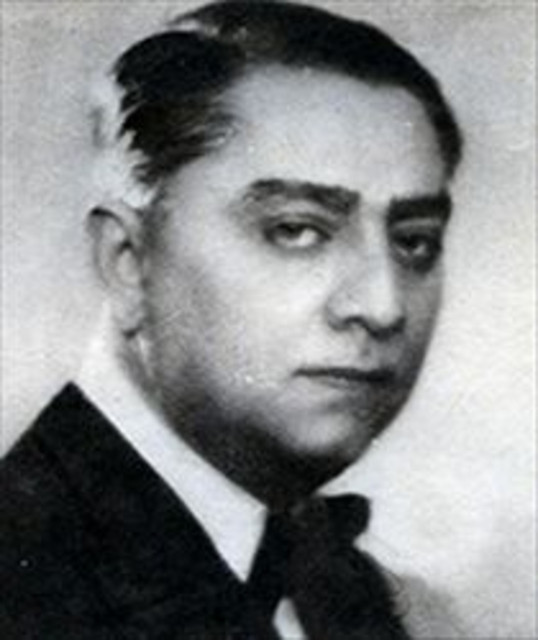
Grigoras Dinicu was a prominent composer and violinist in his day, an artist who drew accolades for his virtuosity from many world-renowned performers, including Jascha Heifetz, who called him the most talented violinist he had ever encountered. Dinicu's reputation, both as composer and performer, began to fade after his death. In many ways his career paralleled that of Ignaz Paderewski: like his keyboard counterpart, Dinicu became active in politics, though on a smaller scale, and also like him, attracted attention for his mostly light, virtuosic, and tuneful compositions. Dinicu made a number of recordings beginning in the late '20s, some of which are available today on reissue labels like Pearl and Symposium. Heifetz recorded several works by Dinicu, and many modern violinists have programmed and recorded his works as well. Dinicu is best known for his popular encore piece Hora staccato, scored, like most of his compositions, for violin and piano. But he was not a one-work composer: also of note are Hora spiccato, Hora de concert, and Improvisation à la Dinicu. Grigoras Dinicu was born in Bucharest, Romania, on April 3, 1889. A precocious youth, he entered the Bucharest Conservatory in 1902. There he studied theory and solfeggio with composer Dumitru Kiriac-Georgescu and violin with Carl Flesch. Other teachers there included Alfonso Castaldi and Rudolph Malcher. He had later studies with Cecilia Nitzulescu-Lupu and Vasile Filip. Dinicu graduated from the Conservatory in 1906, the year he composed Hora staccato. From 1906-1908 Dinicu played in the Orchestra of the Ministry of Public Instruction while also giving solo concerts. From around this time until 1946 he also regularly arranged popular concerts, appearing in them as both violinist and conductor. Often he played in nightclubs, restaurants, and at other public places. Dinicu also made many tours of Europe and overseas, and from 1927 made a number of recordings. His rendition of Hora staccato dates to the period 1927-1928, when he also recorded Hungarian Potpourri, Hora lui teisanu, and works by other composers, including Tchaikovsky's Melodie No. 3 from Souvenir d'un lieu cher. In the 1930s Dinicu became active in Romanian Roma politics, though he never held a formal office. He was, however, given an honorary presidency of the Romanian Roma's General Union. Dinicu remained active as a performer and composer throughout the war years, but after 1946 curtailed his schedule. He died in Bucharest on March 28, 1949.
First discovered Aug 26, 2026, 3:29 PM