Arnold van Mill
Charts
Tracks
Playlists
Press Mentions
Google Rankings
Overview
Not included in any known risky playlists
Monthly Listeners
855 – 872
Discography
Genres
Spotify has not assigned genres to this artist yet
Top Audiences
Top Listener Locations
 Barcelona, ES25
 London, GB18
 Rome, IT13Madrid, ES12
 Mexico City, MX12
Playlist Summary
Playlist Movement
Event | Playlist | Botted? | Position | Track | Happened at | |
|---|---|---|---|---|---|---|
Biography & Metadata
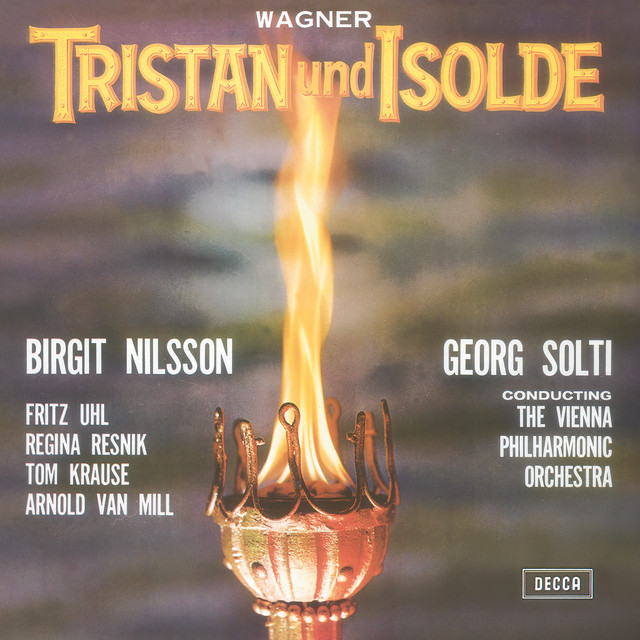
The first line "house bass" for London/Decca records in the 1950s, Dutch bass Arnold van Mill wielded a virile basso cantante that displayed ample bite for Wagner while being supple enough to make him a creditable singer of Mozart bass roles such as Osmin and Sarastro. His recorded legacy attests to a perceptive artist and one authoritative enough to have been exemplary in Verdi roles had his services not been required elsewhere. Trained at the Rotterdam and Hague conservatories, van Mill made his stage debut at Brussels' Théâtre de la Monnaie. From 1946 until 1950, he was a member of the Royal Opera at Antwerp. His debut at the postwar Bayreuth Festival took place in 1951 and his mellifluous Titurel is preserved on the London/Decca recording made of that revolutionary Wieland Wagner production. In 1953, he became a member of the Hamburg Staatsoper, remaining with that company for many years. He was heard with the Hamburg company on its visit to the 1956 Edinburgh Festival (the bass' singing of the title role in Cornelius' De barbier von Bagdad as described by Harold Rosenthal as "magnificent," though his Sarastro found him in less effulgent voice) and in 1969, the bass participated in the world premiere of Krzysztof Penderecki's The Devils of Loudon. Other productions at the Bayreuth Festival presented van Mill as Fasolt, Fafner, a money-grubbing yet sympathetic Daland, and a King Marke described by critic Horst Kögler as "dignified." At Glyndebourne in 1957, the bass presented his gruff but endearing Osmin, a portrayal beautifully sung. Arnold van Mill's legacy resides in good measure with his recordings. Beginning with his Bayreuth Titurel of 1951, many of them are of the Wagnerian repertory. When Kirsten Flagstad chose to recorded Acts I and III of Die Walküre (preserving a record of her Sieglinde and avoiding Brünnhilde's Act II "War Cry," then beyond her), van Mill was the choice for Hunding. Contrasted with the aging Siegmund of Set Svanholm and the somewhat matronly Sieglinde of Flagstad, van Mill's Hunding is firm of voice and incisive in setting forth the text. Sumptuous sound captures voice quality with great accuracy. When Birgit Nilsson won such ecstatic reviews for her Metropolitan Opera Isolde, a recording of the opera was imperative and van Mill was chosen for King Marke. While legendary bass Alexander Kipnis expressed reservations about the quality of van Mill's voice in a review of the recording, most critics found it praiseworthy and the artist's dramatic instincts fully engaged. When Herbert von Karajan pulled together an all-star cast for a London/Decca Aida, van Mill proved himself a superb Ramfis, biting in declamation, equally adept at legato singing, and uncompromisingly authoritative. The bass also recorded a noteworthy Commendatore for RCA, later on the London/Decca label.
First discovered Aug 21, 2026, 6:53 AM