Nino Rota
Charts
Tracks
Playlists
Press Mentions
Google Rankings
Overview
Included in high risk playlists
Monthly Listeners
Discography
Genres
Spotify has not assigned genres to this artist yet
Top Audiences
Top Listener Locations
 Istanbul, TR20,878
 Mexico City, MX20,467
 London, GB15,656
 Santiago, CL15,172
 Madrid, ES12,929
Playlist Summary
Playlist Movement
Event | Playlist | Botted? | Position | Track | Happened at | |
|---|---|---|---|---|---|---|
Biography & Metadata
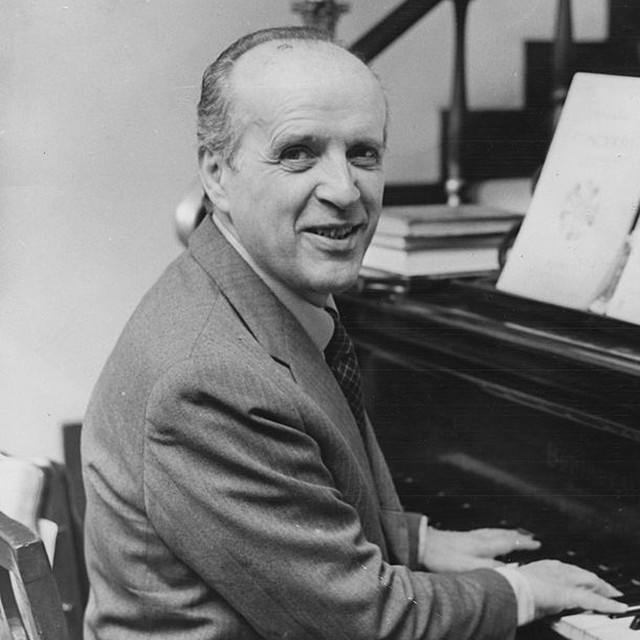
Like many fine concert music composers, such as Serge Prokofiev, Toru Takemitsu, and Bernard Herrmann, Rota created a unique film soundtrack style for which he became known worldwide. Rota was born into a musical family: one of his grandfathers was the pianist-composer Giovanni Rinaldi (1840-1895), and he studied the piano, on which he was to become known as a gifted improviser, with his mother. He also studied solfège and began to compose at the early age of eight. His oratorio L'infanzia di S. Giovanni Battista (The Infancy of Saint John the Baptist) for soloists, chorus, and orchestra was performed in Milan and Lille in 1923, when he was only 12. Rota entered the Milan Conservatory in 1923 and wrote his (unperformed) first opera Il principe porcaro in 1925, basing his original libretto on Hans Christian Andersen's tale. About this time he established a lifelong friendship with Igor Stravinsky. He studied privately with Pizzetti and Casella, and received his diploma at the Accademia di S. Cecilia in Rome in 1930. In the U.S., he studied at the Curtis Institute in Philadelphia from 1931-32, and received an arts degree at Milan University (1937). During this time he composed several minor chamber works. He became a teacher of harmony, solfège, and composition at the Taranto music school (1937-1938) and the Bari Conservatory (1939-1950) where he became director (in 1950). Rota's first film score was for Renato Castellani's Zazà in 1944. He then went on to create music for many classic films by Luchino Visconti (Rocco and his Brothers), Franco Zeffirelli (The Taming of the Shrew and Romeo and Juliet), Mario Monicelli, H. Cass (The Glass Mountain), Francis Ford Coppola (The Godfather, which received an Oscar for best score), King Vidor (War and Peace), René Clément (Plein soleil), Edward Dmytrik, C. Borghesio, M. Soldati (Le miserie del signor Travat), L. Zampa (Anni facili), M. Monicelli (La grande guerra), S.F. Bondarchuk (Waterloo), and Eduardo de Filippo (Napoli milionairia). His 80 scores for Federico Fellini extended from The White Sheik (1952) to The Orchestra Rehearsal (1979). He also composed the music for many theater productions by Visconti, Zeffirelli, and de Filippo. These film scores have a distinctive "Rota" sound made from clear, directly expressive melodies and rhythms, unusual progressions of tonal chords, and often an earthy humor. Of Rota's 10 operas, the exciting Il capello di paglia di Firenze (1946) and the philosophical allegory La visita meravigliosa (1970, The Marvelous Visitation) were the most successful. Of his five choral works, the Mysterium (1962) and La vita di Maria (1970) are considered especially fine in compositional technique. He also composed five ballets, including Amor di poeta (1978) for Maurice Bejart, many chamber and piano works, several symphonies, and other orchestral works including the brilliant Harp Concerto (1948). In February 1995, the Nino Rota Foundation was established at Fondazione Cini in Venice.
First discovered Oct 24, 2025, 10:52 PM