André Campra
Charts
Tracks
Playlists
SEO
Press Mentions
Overview
Not included in any known risky playlists
Monthly Listeners
Discography
Top Audiences
Top Listener Locations
 Paris, FR208
 Madrid, ES137
 Mexico City, MX112
 Amsterdam, NL109
 London, GB107
Playlist Summary
Playlist Movement
No activity found
This artist's playlist additions and removals will appear here.
Biography & Metadata
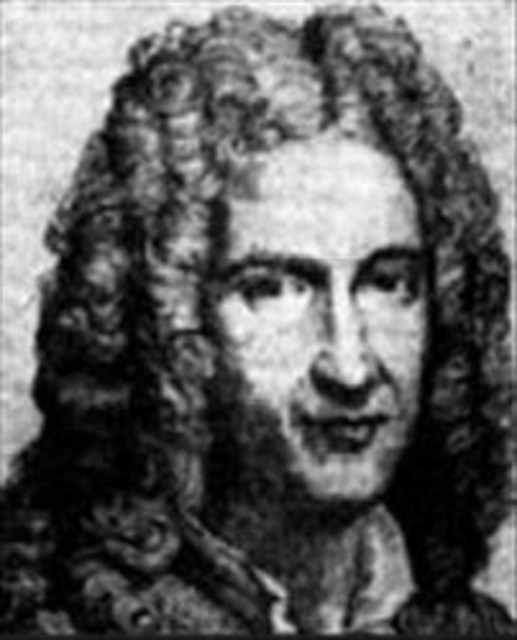
The most significant composer for the French stage between Lully and Rameau, Campra was born in Aix-en-Provence in 1660. His father, an amateur violinist, provided him with his first music lessons, and while he was a slow learner at first, he did begin to show talent, and joined the choir of St. Sauveur in 1674. At one point he nearly lost his place in the choir when he was caught giving unauthorized performances in secular theaters on the side. In August of 1681 he became the music master at the church of Ste. Trophime in Arles, and two years later moved on to the same position at the Cathedral of St. Étienne in Toulouse. In 1694 he took a leave of absence that became permanent when he became music master at Notre Dame. Until he arrived in Paris he had composed mostly sacred music, but even though he had reached a top position in the world of church music, the dramatic stage once again began to draw his creativity. in 1697, he presented a new form of his own invention, the opéra-ballet. A loosely plotted song-and-dance spectacle, L'Europe galante was well received by its aristocratic audience. Its successors, the similar divertissements Vénus (1698) and The Venetian Carnival (1699), were likewise successful. He had published these in his younger brother's name because he was afraid of losing his church appointment, but after these successes, he was confident in his ability to support himself with secular music. In 1700, he left Notre Dame and wrote his first opera, Hesione. Of the eight operas (or tragédies-lyriques) that followed, only Tancrède (1702) and Idomenée (1712) have been performed with any regularity in the twentieth century. Campra assumed a dominant position in the world of dramatic music; he was granted a publishing monopoly and, in 1718, an annual no-strings-attached pension by King Louis XV. In 1708, he wrote his first book of secular cantatas in French, specifying that he wanted to combine the liveliness of Italian music with the delicacy of French music; this was followed by a second book in 1714 and a third in 1728. In 1720, Campra began to write sacred music again, and in 1722 he was made master of the royal chapel and official composer and music director for the Prince of Conti. He wrote a good deal of material for the royal chapel between then and his retirement in 1742. Campra's prolific writing was more or less evenly divided among opéra-ballet, sacred music, and tragic opera. While the opéra-ballet was intended as light entertainment, Campra's works in the form are musically sophisticated and varied. They combine characteristics of Italian music, particularly an emphasis on melody, with various influences from Lully, providing new ideas after French music had become somewhat stale under Lully's near-complete domination. Similarly, his tragic operas also show innovations, such as the highly atmospheric musical special effects of Idomenée and Hesione; these paved the way for Rameau's musical language. Like that of his contemporary Bach, Campra's sacred music also wove Italian influences into an essentially conservative idiom.
First discovered Aug 24, 2026, 8:17 PM