Antonio Aguilar
Charts
Tracks
Playlists
Press Mentions
Google Rankings
Overview
Included in high risk playlists
Monthly Listeners
Discography
Top Audiences
Top Listener Locations
 Mexico City, MX690,250Guadalajara, MX398,948
 Bogotá, CO292,302Puebla City, MX224,350
 Guatemala City, GT185,080
Playlist Summary
Playlist Movement
Event | Playlist | Botted? | Position | Track | Happened at | |
|---|---|---|---|---|---|---|
Biography & Metadata
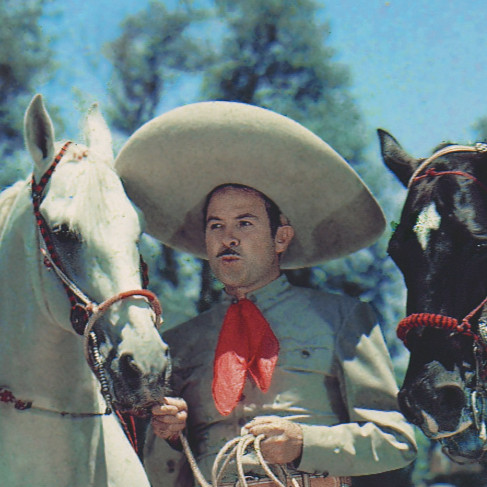
Antonio Aguilar reigned among the most popular Mexican singers and actors of his generation, recording more than 150 traditional mariachi albums and a staggering 167 feature films during the course of a career spanning more than a half century. Dubbed "El Charro de México," Aguilar invariably appeared on-stage and onscreen in the sequined garb of the rodeo rider, complete with sombrero. His popularity at home was matched by an enormous fan base of Latinos living in the U.S., and in 1997 he broke box-office records by selling out New York City's Madison Square Garden across six consecutive nights. Born Pascual Antonio Aguilar Barraza outside of Villanueva, Mexico, on May 17, 1919, he began riding horses as a toddler, with a habit of singing while in the saddle. As a teen, he entered the U.S. as an illegal immigrant, settling in Los Angeles and working as a waiter while saving money in hopes of funding acting and singing classes. Upon returning to Mexico in 1945 Aguilar pursued a career in opera, but a friend recommended he instead try his hand at mariachi and "use that powerful voice to sing the songs of the people." By 1950 he was recording, and that same year made his film debut alongside Mexican cinema legends Pedro Infante and Marga Lopez in Un Rincón Cerca del Cielo. With 1956's Tierra de Hombres Aguilar landed his first starring role, and in the years to follow he emerged as the biggest draw in Mexican moviemaking. Inevitably cast as a two-fisted but tender-hearted cowboy balladeer, his pictures are also credited with popularizing la charreada, a style of rodeo deeply rooted in the legendary charro tradition. When Aguilar was not filming a motion picture, he was recording a new album. Singles including "Caballo Prieto Azabache," "Gabino Barrera," and "Puno de Tierra" made him a superstar, and in time he began writing and producing screenplays constructed around his songs. Aguilar's long marriage to actress/singer Flor Silvestre further endeared him to fans, and together they co-starred in myriad films -- she also recorded more than 100 albums in her own right. Aguilar nevertheless enjoyed his greatest popularity during the 1960s, when his stage appearances came to include elements of rodeo, complete with roping, bull-riding, and clowns -- the headliner himself even embraced the chance to show off his formidable prowess on horseback. In 1969 Aguilar returned to southern California to co-star opposite John Wayne and Rock Hudson in The Undefeated, his first Hollywood production. The Civil War-era drama's final cut nevertheless left him deeply wounded with its stereotyped portrayal of Mexican culture, and he subsequently declined all offers from U.S. producers. Aguilar returned home to star as Mexican heroes ranging from Pancho Villa to Emiliano Zapata. Although his popularity waned during the 1970s, by the mid-'80s he enjoyed a commercial resurgence, spearheading a revival in the tambora genre via the smash "Triste Recuerdo." Three years after his triumphant Madison Square Garden stint, Aguilar earned a star on Hollywood's Walk of Fame in recognition of worldwide record sales in excess of 25 million. His health declined in the decade to follow, however, and in 2006 he mounted what proved to be a farewell tour of the U.S. After battling pneumonia, he died in Mexico City on June 19, 2007. ~ Jason Ankeny, Rovi
First discovered Aug 11, 2026, 3:14 PM