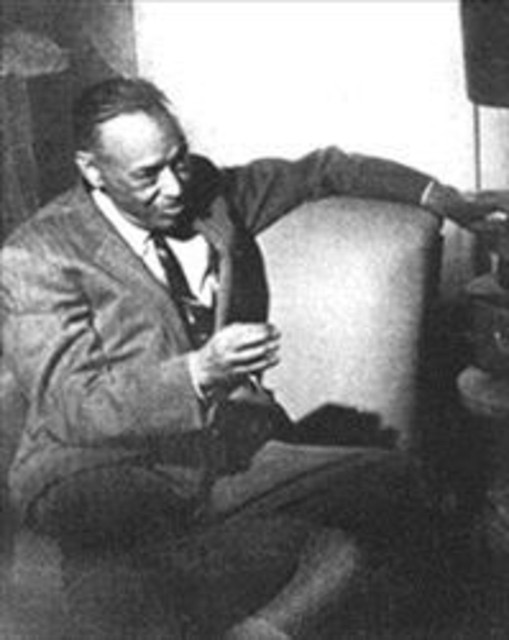
William Grant Still
Charts
Tracks
Playlists
SEO
Press Mentions
Overview
Not included in any known risky playlists
Monthly Listeners
Discography
Genres
Spotify has not assigned genres to this artist yet
Top Audiences
Top Listener Locations
 London, GB3,586
 Sydney, AU1,927
 New York City, US1,666Melbourne, AU1,590Chicago, US1,507
Playlist Summary
Playlist Movement
No activity found
This artist's playlist additions and removals will appear here.
Biography & Metadata
"With humble thanks to God, the Source of Inspiration." Such is the inscription to be found on the scores of the works of William Grant Still, sometimes called "The Dean of African-American Composers" and one of America's most versatile musicians. Still was but three months old when his father, the town bandmaster, died. Shortly thereafter, his family moved to Little Rock, AK. Still has written movingly of the influence his mother and grandmother had in forming his character and instilling in him a love for the arts. In addition, his new stepfather was a big music fan, and encouraged his stepson's interest by taking him to operettas and buying him recordings. Still's education continued at Wilberforce University, which he entered at age sixteen, and at the Oberlin Conservatory, where he studied theory and composition. He also had studies with George W. Chadwick and Edgard Varèse, all the while supporting himself by playing in orchestras and bands. After a stint in the U.S. Navy in 1918, Still did arrangements for W. C. Handy and Paul Whiteman, played oboe in the famous Noble Sissle-Eubie Blake revue Shuffle Along, and began a decades-long association with radio, arranging and producing programs for the Mutual and Columbia networks. His early compositions were fairly dissonant and complex (perhaps under Varèse's influence); he made a major breakthrough when he took Chadwick's advice and started incorporating elements of African American and popular musical styles into his works. His first big hit, and his best-known work to this day, is his first symphony, the "Afro-American," which was given its premiere in Rochester, NY, in 1931, and was soon performed all over the world. After moving to Los Angeles in 1934, Still turned his attention to film, providing the scores for movies like Lost Horizon and the original Pennies from Heaven. Later he also scored a number of television shows, including Perry Mason and Gunsmoke. Guggenheim and Rosenwald Fellowships allowed him to produce large-scale works like the ballet Lenox Avenue (1937) and the operas Blue Steel (1935) and Troubled Island (1938). The last-named work -- with a libretto by Langston Hughes and based on the life of Dessalines, the first Emperor of Haiti and one of the major figures in Haiti's independence -- was premiered by the New York City Opera in 1949 and was very well received. Still continued to write politically and racially conscious works throughout his life, such as the narrated work And They Lynched Him On A Tree (1940) and In Memoriam: The Colored Soldiers Who Died For Democracy (1944). In the 1950s, he turned to writing children's works, such as The American Scene (1957), a set of five suites for young people based on geographic regions of the United States. In 1981, Still's opera A Bayou Legend was the first by an African-American composer to be performed on national television. He was also the first African American to conduct a major U.S. orchestra (when he led the Los Angeles Philharmonic in a Hollywood Bowl concert of his own music), and the first African-American composer to have his works performed by major American orchestras and opera companies.
First discovered Aug 28, 2026, 11:58 AM