Dimitri Mitropoulos
Charts
Tracks
Playlists
Press Mentions
Google Rankings
Overview
Not included in any known risky playlists
Monthly Listeners
6,478 – 6,888
Discography
Genres
Spotify has not assigned genres to this artist yet
Top Audiences
Top Listener Locations
 New York City, US105
 Mexico City, MX104
 London, GB99
 Santiago, CL86
 Athens, GR75
Playlist Summary
Playlist Movement
Event | Playlist | Botted? | Position | Track | Happened at | |
|---|---|---|---|---|---|---|
Biography & Metadata
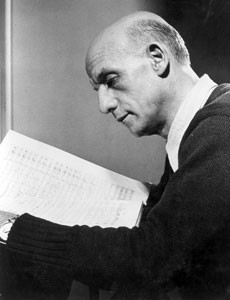
Conductor Dimitri Mitropoulos stood apart from the European traditions that dominated first-rank American orchestras for much of the twentieth century. After attending the Athens Conservatory, where he studied piano and composition, his opera Béatrice was presented there. The French composer Saint-Saëns was in the audience, and was so impressed that he arranged a scholarship that enabled the 24-year-old to study composition with the Belgian composer Paul Gilson and piano with Busoni in Berlin. Busoni persuaded him to abandon composition and concentrate on becoming a conductor. From 1921 to 1925, Mitropoulos assisted Erich Kleiber at the Berlin State Opera and on Kleiber's recommendation, was appointed conductor of the Hellenic Conservatory Symphony Orchestra in Athens. In 1927, he became conductor of the Greek State Symphony Orchestra and in 1930 was engaged to conduct the Berlin Philharmonic Orchestra, where he instituted the practice of conducting from the piano. In 1937 Mitropoulos succeeded Eugene Ormandy as musical director of the Minneapolis Symphony Orchestra in 1937. He became a U.S. citizen in 1946, and remained in America until 1959. After 12 years in Minneapolis, he was invited to share the conductorship of the New York Philharmonic Orchestra with Stokowski, becoming its conductor when Stokowski resigned in 1950. Mitropoulos resigned the post after sharing the podium with Leonard Bernstein, his co-principal conductor, in the Orchestra's 1958 tour of Latin America. From 1954, he was a dynamic force as Bruno Walter's successor at New York's Metropolitan Opera, where he introduced many new operas, including ones by Richard Strauss and Samuel Barber. Mitropoulos never conducted his own works, but considered his best composition to be a Concerto Grosso written in 1929. His lived simply and took little part in social activities. His conducting style was passionate, highly-charged and demonstrative; he had a phenomenal memory and rarely used a baton. The American composer and music critic Virgil Thomson once described him as "oversensitive, overweening, over brutal, over intelligent, underconfident and wholly without ease....His personal excitement borders on hysteria and he distorted music with nervous passion." Whether or not this judgement was true, or fair, he programmed much modern music and particularly admired Schoenberg and the Second Viennese School, such as Webern and Berg, as well as twentieth century American and British composers. His recording of Mahler's First Symphony made with the Minneapolis Symphony Orchestra in 1941 was the first ever made in the U.S. of that work, and Mitropoulos was awarded the American Mahler Medal of Honor in 1950 for his work in promoting the composer's music. He died while rehearsing Mahler's Third Symphony with Toscanini's famous La Scala Orchestra.
First discovered Aug 22, 2026, 10:26 PM