Jerome Kern
Charts
Tracks
Playlists
Press Mentions
Google Rankings
Overview
Not included in any known risky playlists
Monthly Listeners
36,651 – 36,964
Discography
Genres
Spotify has not assigned genres to this artist yet
Top Audiences
Top Listener Locations
 London, GB597
 New York City, US519
 Sydney, AU403Melbourne, AU364Los Angeles, US358
Playlist Summary
Playlist Movement
Event | Playlist | Botted? | Position | Track | Happened at | |
|---|---|---|---|---|---|---|
Biography & Metadata
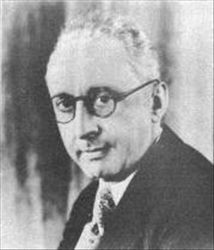
Jerome Kern was born on January 27, 1885, in New York City, the son of Fannie Kakeles and Henry Kern. He grew up in Newark, NJ, learning piano from his mother and composing his first musical at the age of 17. Kern's early professional career was highly varied. He worked as a rehearsal pianist for theaters throughout New York and plugged songs for T.B. Harms, a struggling music publishing house. As a composer, he wrote songs and pieces to be interpolated into imported shows and vaudeville acts. In the early twentieth century, musicals were imported from Europe or England, then adapted to the American stage. Gilbert and Sullivan, Franz Lehár's The Merry Widow, and the operettas of Victor Herbert -- these were the types of shows that the imported musical sought to imitate. Kern was so successful at reviving sickly scores that he became known as the "fix-it" man, a composer who could take a mediocre or even poor score by a European composer and breathe new life into it. When work was slow in New York, Kern traveled to London where producers also hired composers to write new songs for their shows. Between 1915 and 1918, Kern began writing a new kind of musical. He was working for the Princess Theater in New York City. Because the building was small, a more intimate type of drama and setting were used. The pit had room for only 11 instrumentalists. Kern worked on his musicals with librettist Guy Bolton and lyricist P.G. Wodehouse. Their productions sought to integrate story with music to create plays with true-to-life, every-day characters. The result was a string of popular successes, beginning with Nobody Home in 1915, followed by Very Good Eddie (1915), Oh Boy! (1917), and Oh Lady! Lady! (1918). These shows brought the American musical into its own and inspired a host of new songwriters, such as George Gershwin and Richard Rodgers. Later shows, such as Sally (1920) and Sunny (1925) helped popularize the American musical abroad. Kern's most important single contribution to American theatrical history was Showboat, written in 1927. He worked with Oscar Hammerstein II to turn Edna Ferber's novel into a musical play. The score to Showboat contains such memorable numbers as "Ol' Man River," "Can't Help Lovin' Dat Man," and "Make Believe." Showboat was filmed three times (1929, 1936, and 1951) and premiered at the New York City Opera in 1954. In Kern's later years, he largely wrote for movies. Swing Time (1936) featured Fred Astaire and Ginger Rogers singing and dancing to "A Fine Romance," "Pick Yourself Up," and "The Way You Look Tonight." Other movies containing Kern songs are Lady Be Good (1941), You Were Never Lovelier (1942), and Cover Girl (1944). Kern died unexpectedly on November 11, 1945, in New York City. Critics and musicologists speak of the elegance of his melodies, the nuanced speech rhythms in his text settings, and the subtle harmonic and rhythmic effects that make his songs so moving.
First discovered Aug 13, 2026, 5:03 AM