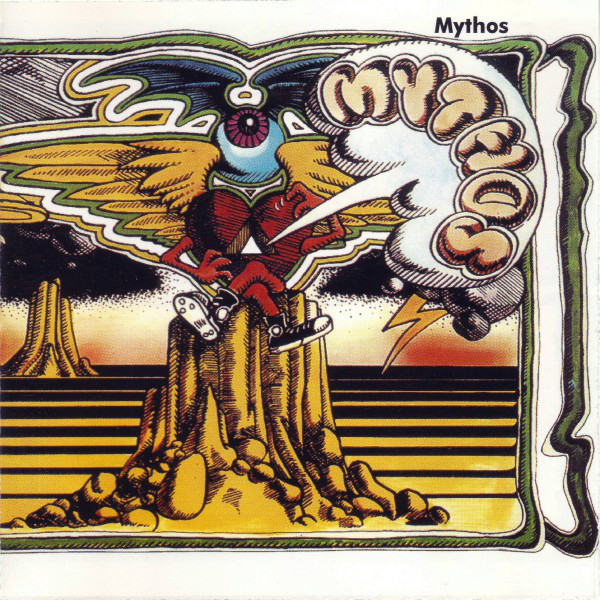
Mythos
Charts
Tracks
Playlists
Press Mentions
Google Rankings
Overview
Not included in any known risky playlists
Monthly Listeners
Series
- Monthly Listeners
- Listeners from Playlists
- Change
Discography
Top Audiences
Top Listener Locations
 Berlin, DE24
 London, GB22
 Los Angeles, US21
 Melbourne, AU18Frankfurt am Main, DE14
Playlist Summary
Playlist Movement
Event | Playlist | Botted? | Position | Track | Happened at | |
|---|---|---|---|---|---|---|
Biography & Metadata
Mythos did not reach the popularity of contemporary bands like Tangerine Dream or Ash Ra Tempel, which were founded in Berlin in the late '60s, too. Though with time, some of the albums have developed as classics and are reissued periodically. Different from other Krautrockers which elaborated a unique teutonic sound, Mythos, in part, had similarities with British and American bands and mixed the influences with their own music. Although the band has changed musical direction with time, there is a continuity, a transition from the early psychedelic music to the new age sound of the late '90s. In 1996, Stephan Kaske did a cover version of Händel's "Feuerwerksmusik" with his M.A.S.S. side project, also featured on the first Mythos LP in 1971, although very different in interpretation. In 1969, high school dropouts Stephan Kaske (b. October 26, 1951), Harald Weisse, and Thomas Hildebrand, all musical autodidacts, formed the band in Berlin. After the release of their first album, Mythos, they supported British acts like Family, Colosseum, Humble Pie, and Steamhammer on many tours. The first lineup drifted apart after three years; a new one, which followed, did not release a record. In 1975, Mythos got a deal with the famous/ill-famed label Cosmic Couriers, again presenting a complete new lineup around Kaske. Some soundtracks for TV films and documentaries followed. The instruments, up to then predominated by flute and guitar, were expanded by "cosmic" synthesizers now, accompanying the unusual and effect-laden vocals. The next lineup since 1976 lasted for three years and two records with Stephan Kaske on guitar, flute, keyboards, and vocals, guitarist Sven Dohrow, Eberhard Seidler on bass, and Ronnie Schreinzer on drums. The music got harder; the synthesizers were completed by hard rock guitars. After the permanent change of musicians, Kaske finally decided to part from the band in 1980 to do his own thing. The development of sequencers and drum machines made other musicians and the subsequent compromises unnecessary. Sven Dohrow and Ronnie Schreinzer founded the Twins; they changed to synth-pop, had some minor hits, and have remained sporadically active. Stephan Kaske founded the Mythos Studio Berlin in 1981 and as it was a big success from the beginning, he had no time to record his music until 1989. Ideas and compositions were used for numerous radio and TV commercials. Meanwhile, Stephan Kaske has produced and cared for over 1,000 bands and artists in his studio. A new musical sign of life was a live-EP in 1989, followed by an album the next year. In the mid-'90s Stephan Kaske again concentrated on his own music that had changed a lot. He has released several albums of mediation/new age music. He has a side project, M.A.S.S., where he produces music ordered by record labels, like adaptions of Mozart, Händel, Beethoven, and others for synthesizer and covers of Jean-Michel Jarre, Vangelis, or Ennio Morricone. Besides this, he has a techno project called Momentum. ~ Klaus Kehrle, Rovi
First discovered Oct 18, 2026, 3:34 AM