Eloy
Charts
Tracks
Playlists
Press Mentions
Google Rankings
Overview
Not included in any known risky playlists
Monthly Listeners
Series
- Monthly Listeners
- Listeners from Playlists
- Change
Discography
Top Audiences
Top Listener Locations
 Santiago, CL2,338
 Istanbul, TR2,006
 Warsaw, PL1,969
 São Paulo, BR1,936
 Athens, GR1,520
Playlist Summary
Playlist Movement
Biography & Metadata
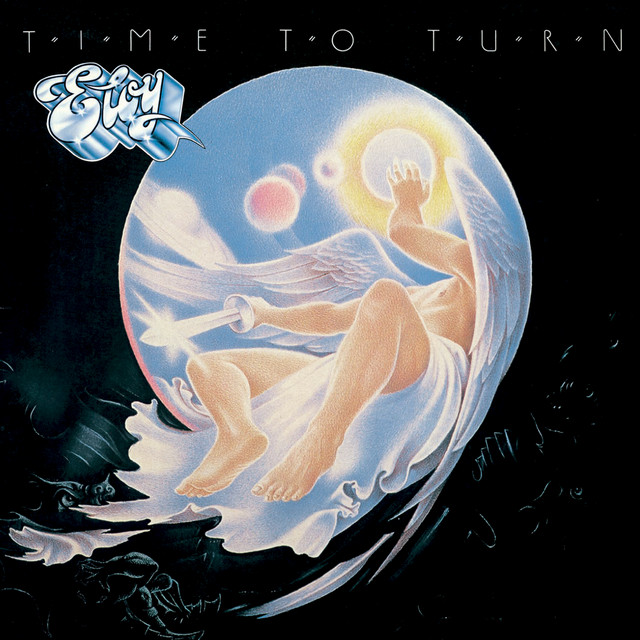
A venerable progressive rock outfit and one of the most popular German bands of the 1970s, Eloy went through several stages in their long career, with the only constant member being guitarist/vocalist Frank Bornemann. Emerging in 1971, they transformed from a political-themed hard rock group to a spacy progressive rock band with the releases of the seminal Dawn (1976) and Ocean (1977), which sounded something like a mix of Jethro Tull, Camel, and Pink Floyd. In later formations, Eloy would move toward a more accessible hard rock sound with strong progressive elements, a style they would continue to hone into the next century with wide-ranging efforts like Visionary (2009) and Echoes from the Past (2023). Eloy were formed in 1969 by Frank Bornemann (guitar, harmonica, percussion), Erich Schriever (lead vocals, keyboards), Manfred Wieczorke (guitar, bass, vocals), Helmut Draht (drums), and Wolfgang Stöcker (bass). Taking their name from that of a human race in the book The Time Machine by H.G. Wells, they released their first single, "Daybreak," in 1970 and put out their eponymous debut album the following year. Filled with conventional hard rock and political statements, the album is an anomaly in the band's catalog. Schriever, who was responsible for the band's political lyrics, left the group after Eloy's debut, as did Draht, who was replaced by Fritz Randow. Inside, released in 1973, consolidated the group as a full-on progressive rock-styled outfit. After the album, which fared decently, Stöcker left the band, to be replaced by Luitjen Janssen. Floating (1974) and Power and the Passion (1975) increased Eloy's reputation and success; the latter record was recorded with second guitarist Detlef Schwaar. It was also the group's first concept album. The band broke up in 1975, with some members of the group wanting to continue to write spacy, progressive rock concept albums, while others wanted to take a more restrained approach. Eloy resurfaced in 1976 with Bornemann as the producer and mastermind behind the band, which featured new members Klaus-Peter Matziol (bass, vocals), Detlev Schmidtchen (keyboards, vocals), and Jürgen Rosenthal (drums, vocals). With this lineup, Eloy became the best-selling German act of their time, with increasingly ornate concept albums such as Dawn (1976) and the spacy Ocean. Eloy Live was released in 1978, and the following year's Silent Cries and Mighty Echoes was the band's highest-selling record. Schmidtchen and Rosenthal left the group to go solo and were replaced by Hannes Folberth and Jim McGillveray, respectively. Eloy also added guitarist Hannes Arkona. The new lineup released Colours in 1980, which saw them start to abandon their spacy elements to pursue a harder rock sound. Planets (1981) and Time to Turn (1982) were two parts of a science fiction concept album that found the group's sound increasingly dominated by keyboards. The band released Performance and Metromania in 1984 and then split due to musical differences after a series of farewell concerts in England. Eloy returned in 1988, this time as a duo featuring Bornemann and multi-instrumentalist Michael Gerlach. The first Eloy record with this lineup was Ra, which saw a return to the sound of Colours. It was followed by the like-minded Destination (1992). Both records did quite well on the German charts. Several members of Eloy re-formed in 1993 to re-record older tracks for Chronicles I, followed by Chronicles II the next year. In 1994 the band recorded The Tides Return Forever, which featured the return of Klaus-Peter Matziol. The conceptual Ocean 2: The Answer, with new drummer Bodo Schopf, was released in 1998, but it would be many years before the band would return to the studio again. In 2009, after numerous compilations, reissues, and box sets, Eloy reconvened for a new studio album. The resulting Visionary featured a lineup that included Frank Bornemann on lead vocals and guitar, Klaus-Peter Matziol on bass, Michael Gerlach on keyboards, and Bodo Schopf on drums and percussion. In 2017, after another long hiatus, the band released The Vision, the Sword and the Pyre, Pt. 1, the first of a planned three-volume rock opera about the life of Joan of Arc. The Vision, the Sword and the Pyre, Pt. 2 followed in late 2019, with the conclusive Echoes from the Past appearing in 2023. ~ Geoff Orens, Rovi
First discovered Sep 8, 2024, 9:05 PM