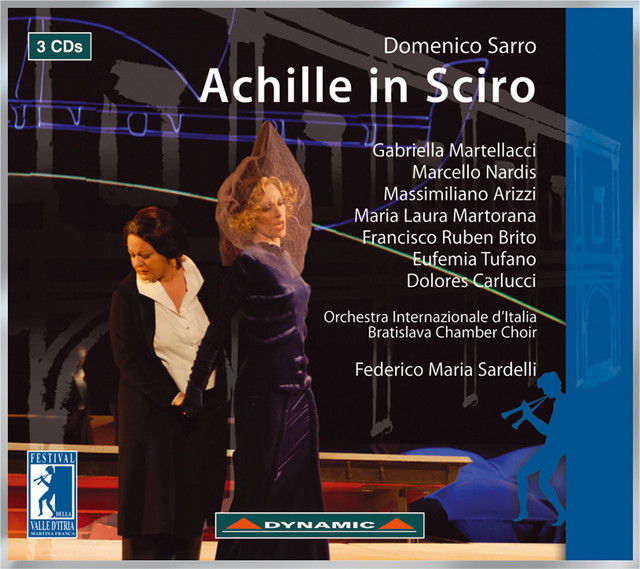
Domenico Sarro
Charts
Tracks
Playlists
SEO
Press Mentions
Overview
Not included in any known risky playlists
Monthly Listeners
Discography
Genres
Spotify has not assigned genres to this artist yet
Top Audiences
Top Listener Locations
 Madrid, ES52
 Warsaw, PL48
 London, GB39
 Paris, FR39
 Mexico City, MX36
Playlist Summary
Playlist Movement
No activity found
This artist's playlist additions and removals will appear here.
Biography & Metadata
Though not a terribly famous composer out of Naples, Sarro was one of the first important composers to develop from the Neapolitan Conservatories in the eighteenth century. He studied at S. Onofrio from the age of six or seven when he arrived in Naples. "L'opera d'amore" was his first opera and it was performed in Naples in 1702. By 1704 he was appointed as the assistant choirmaster to the court but it was not until 1735 that he became the master of the chapel. Naples was under the control of the Austrians for a period of approximately thirteen years thwarting attempts by Spanish sympathizers to advance (c. 1707-1718/20). From 1725 on, however, Sarro remained in service to the court. His productive years were between 1718 and 1741 the most generative being between 1718 and 1725. Though he composed a number of operas, "Didone abbandonata" is perhaps the most significant. It was the first important libretto written by Metastasio scored for the first time by Sarro. Most of his works are considered to be derivative and imitative at best but Sarro can also be understood as a transition figure who linked Scarlatti with Porpora, Vinci and Leo. "Valdemaro," 1726, is considered important because of Sarro's demonstrated interest in the upper voice. In this opera the melodic lines were dominant in the upper voices and the lower voices were given the characteristics of accompaniment. Vinci has been credited with these methods but they are properly ascribed to Sarro.
First discovered Aug 26, 2026, 12:45 PM